



 1 Min
1 Min In OTC

Follow this topic

Bookmark

Record learning outcomes
Globally, and in the UK, there are three types of cancers that most commonly affect men: prostate cancer, lung cancer and bowel cancer.
As with all cancers, early detection increases the chances of recovery, but men are often reluctant to open up about their symptoms.
When these symptoms relate to matters ‘below the belt’, like prostate or bowel cancer, men will often try to avoid the potential awkwardness of an initial discussion and any testing that may be required.
The pharmacy team can help, however, by encouraging conversations and raising awareness of the sorts of symptoms that should prompt men to make an appointment with a GP.
Prostate focus
Prostate cancer is now the most commonly diagnosed cancer in the UK. It affects the prostate gland, which is located under the bladder in men.
“In the UK, about one in eight men will get prostate cancer in their lifetime. Each year, approximately 63,000 men are diagnosed with prostate cancer in the UK, and more than 12,000 men die from the disease,” says Prostate Cancer UK’s assistant director of health improvement, Amy Rylance.
“It is the most common cancer in men. It mainly affects men over 50, and risk increases with age. The risk is even higher for black men and men with a family history of prostate cancer.”
The good news is that when caught at an early stage, prostate cancer can be treated and a full recovery made – which is why men aged 50 or over should regularly get their prostate examined, and can ask their GP for a PSA test, even if they do not have any symptoms.
“Anyone concerned about their risk of prostate cancer can speak to their GP about whether a PSA blood test is appropriate for them,” says Amy.
“A PSA test on its own cannot diagnose or rule out prostate cancer, but it is often the first step in assessing whether further investigation is needed.”
So, what are the symptoms that may prompt a referral to the GP?
Spotting symptoms
“Possible symptoms of prostate cancer include problems [urinating] – frequency, urgency, stop/start or pain,” says Amy.
Other symptoms may include:
- Having a weak flow of urine
- Trouble starting to urinate or straining to urinate
- Feeling like you still need to urinate when you’ve just finished
- Erectile dysfunction
- Blood in the urine or semen
- Lower back pain
- Unexpected weight loss.
For some men, these symptoms may mean they have an enlarged prostate, which is a non-cancerous condition that occurs as men get older and their prostate gets larger.
“It is important to emphasise that early prostate cancer often has no symptoms and that these symptoms are often caused by benign issues,” Amy explains.
“But if customers are buying continence products and do not have a diagnosis to explain their change in urinary habits, then they should be strongly encouraged to speak to their GP.”
Prostate Cancer UK has created a 30-second risk checker that you can signpost customers to at: prostatecanceruk.org/riskcheck.
Community pharmacy teams can help male customers by providing a comfortable and private space for anyone wanting to discuss potential problems with their prostate, as many people still find it a difficult subject to address, even with a healthcare professional.
Amy also says that pharmacy teams can provide support by sharing accurate and timely advice with customers.
“Unfortunately, there are a lot of misleading adverts on social media suggesting that supplements can reduce the risk of prostate cancer, so customers may ask for advice about what they can buy that will prevent prostate cancer,” she says.
“There is no evidence that supplements can reduce your risk of prostate cancer.”
“One in eight men will get prostate cancer in their lifetime”
Bowel checker
Genetic, environmental or lifestyle factors can contribute to the development of bowel cancer, an umbrella term for cancer anywhere in the large bowel, including in the colon and rectum.
“One in 17 UK men are diagnosed with bowel cancer during their lifetime,” says Claire Coughlan, clinical lead at Bowel Cancer UK.
“Bowel cancer is treatable and curable, especially if diagnosed early. However, studies have shown that men can be more reluctant to seek support for medical problems than women, downplaying symptoms or not seeking help until it’s an emergency.”
In the pharmacy, knowing which symptoms can indicate bowel cancer may save a customer’s life.
Symptoms to be mindful of include bleeding from the bottom, blood in the stool or a change in bowel habits, such as a change in texture or density of the stool, constipation, bloating or feeling like you still need to go after having been to the toilet.
“Men might also experience unexplained weight loss, fatigue, or a pain or lump in their abdomen,” says Claire.
What to watch out for
The NHS recommends that anyone experiencing any of these symptoms for three weeks or more should visit their doctor.
However, there is the possibility that people may not have picked up on their symptoms, or they may have dismissed them.
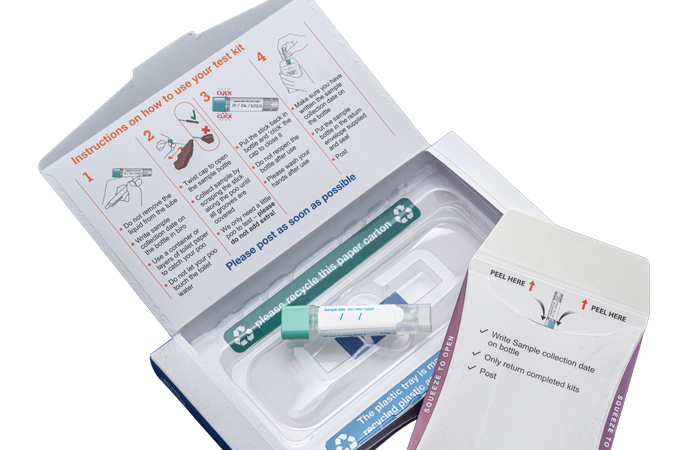
This is why it is so important for men aged 50 and older to complete the free, NHS bowel screening kit when it is sent to them.
“Everyone between the ages of 50 and 74 is eligible for bowel cancer screening in England, Scotland and Wales (60 and 74 in Northern Ireland), but men are sadly less likely to take part in the programme than women are,” says Claire.
“While most people return their screening kits once they’re sent one, many kits still go unreturned, due to people forgetting to take them or believing they’re only for people with symptoms.
This is not the case – screening is for people without any symptoms of bowel cancer. Despite this, men are more likely to cite not having symptoms of bowel cancer as a barrier to completing screening kits.”
All people of eligible age should receive their free bowel cancer screening kit in the post every two years.
If the result suggests that further tests are required, they will be invited to an appointment with a specialist nurse who will discuss the results, and next steps.
This will usually involve a colonoscopy, a procedure where a camera is used to check inside the bowel.
If blood is found in someone’s stool, it does not automatically mean they have cancer, but it is important to have it checked out.
“However old men are, if they have symptoms they are concerned about, they should contact their doctor and get them checked out,” says Claire.
“Men of screening age should also prioritise returning their screening test as soon as they receive it. It could save their life.”
“Studies have shown that men can be more reluctant to seek support for medical problems than women”
Looking after lungs
Around a fifth of all cancer deaths in the UK are due to lung cancer, says research from Cancer Research UK.
“There are around 49,300 new lung cancer cases in the UK every year – that’s more than 130 every day. In UK males, it is the second most common cancer, with around 25,500 new cases every year,” says Megan Winter, health information manager at Cancer Research UK.
“Lung cancer is the most common cause of cancer death in the UK, but diagnosis at an early stage can significantly improve the chances of survival.”
In some instances, people can be at risk of developing lung cancer due to a family history of the disease or being exposed to environments with chemicals like asbestos, and air pollution.
However, Megan notes, there is one thing many people can do to drastically limit their risk. “Smoking tobacco is the biggest cause of lung cancer in the UK,” says Megan.
“Stopping smoking is the best thing you can do for your health and to reduce your risk of cancer.”
There may be no signs or symptoms of lung cancer in its early stages, but pharmacy teams should look out for the following in customers:
- A persistent cough
- Coughing up blood
- Persistent breathlessness
- Unexplained tiredness and weight loss
- An ache or pain when breathing or coughing.
“Symptoms of lung cancer include a long-lasting cough or change to an existing cough, a chest infection that doesn’t get better or comes back, and a hoarse voice,” says Megan.
An ache or pain in the chest or shoulder is another general symptom.
Megan underlines the importance of having any of these symptoms – or anything else that is not normal for that person – checked out.
“In most cases it won’t be cancer,” she says, “but if it is, spotting it early can make a real difference.”
Importantly, pharmacy team members can reassure customers presenting with or worried about symptoms that lung cancer can be treated, and to take each step at a time.
The best way to help is by ensuring a customer gets an urgent appointment. “Pharmacy staff can play an important role in supporting people to seek help and overcome barriers to making a GP appointment,” says Megan.
“By offering guidance on next steps, they can give people the confidence and support to talk to their doctor about potential signs of lung cancer.”

Sleeping soundly
Sleep apnoea is a serious sleep disorder that is more common in men than women. The most common type is called obstructive sleep apnoea, and occurs when breathing stops and starts – for some people, for minutes at a time – while they are asleep.
It should be diagnosed as soon as possible, as it can lead to more serious problems if it is left untreated.
Anyone can be affected, but those who fall into any of the following categories are at greater risk:
- Males
- Those who are overweight
- Smokers
- Anyone 40 years old or over
- A family history of sleep apnoea
- Alcohol drinkers
- People with large tonsils, a large tongue, large neck or small jawbone
- Those with nasal congestion
- People with gastro-oesophageal reflux disease (GORD).
Signs and symptoms
Symptoms of sleep apnoea include:
- Breathing stopping and starting
- Making gasping, snorting or choking noises
- Loud snoring.
During the day, people with sleep apnoea may:
- Feel very tired
- Have difficulty concentrating
- Have mood swings
- Have a headache upon waking.
Treatment advice
There are self-care tips that pharmacy teams can recommend if a customer suspects they may have sleep apnoea.
Advice like losing weight for those who are overweight, exercising regularly to maintain that healthy weight, refraining from drinking alcohol and smoking, and sleeping on one side rather than on your back can help.
If these tips don’t help, customers should see their GP for a proper diagnosis.
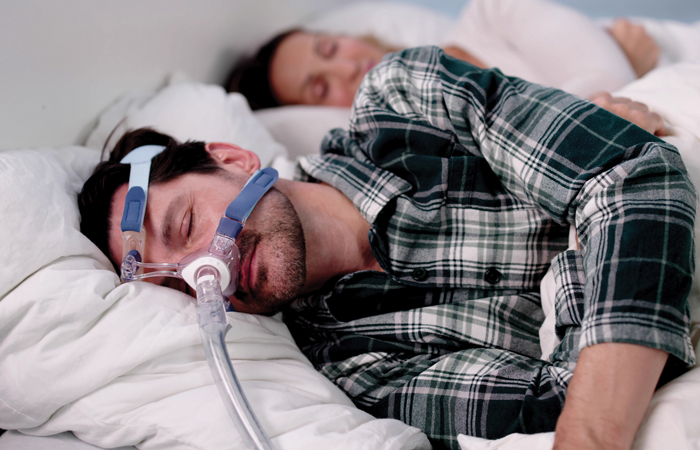
There are a few options when it comes to treatment, including a CPAP machine. This machine gently pumps air into a mask worn over the mouth or nose while sleeping, and is provided for free by the NHS for those who need it.
While it may feel uncomfortable at first, it helps improve breathing by stopping the airways from getting too narrow, allowing for improved quality of sleep and reduced risk of other health issues linked to sleep apnoea.
Without treatment, sleep apnoea can lead to issues like high blood pressure, an increased chance of stroke, type 2 diabetes, heart disease, depression or mood changes, difficulty concentrating at work or school, and an increased risk of tiredness-related accidents such as car accidents.
For couples that share a bed, it can also lead to frustration and relationship strain, as the partner gets woken up by the loud snoring sounds.
Good quality and quantity of sleep is a fundamental pillar of wellbeing, affecting how our bodies function mentally and physically.
Encourage male customers, especially those who may also fall into the other at-risk categories, to act if any signs of sleep apnoea are present.

Share:


In OTC