


 Fibroids and endometriosis
Fibroids
Uterine fibroids are benign growths that arise from the muscle layer of the uterus. They are very common, particularly in women aged 30 to 50 years, although they may occur earlier.
Their impact varies widely, depending on size, number and location.
Many fibroids cause no symptoms and are discovered incidentally. However, when symptoms are present, they most commonly relate to menstrual bleeding.
Women with fibroids often describe very heavy periods, sometimes requiring frequent changes of sanitary protection and associated with the passage of large clots. Bleeding may be prolonged and can significantly disrupt daily activities.
Some women also report pelvic pressure, a sensation of abdominal fullness, or urinary frequency due to pressure on the bladder.
In more severe cases, persistent heavy bleeding may lead to iron-deficiency anaemia, resulting in fatigue, reduced exercise tolerance, dizziness or shortness of breath. These wider symptoms can be an important clue during a pharmacy consultation and should not be overlooked.
Endometriosis
Endometriosis occurs when tissue similar to the lining of the uterus grows outside the womb, most commonly within the pelvis. These deposits respond to hormonal changes during the menstrual cycle, leading to inflammation, scarring and sometimes the formation of adhesions.
The most common symptom is severe menstrual pain, often described as significantly worse than typical period pain and sometimes unresponsive to standard painkillers.
Pain may begin before menstruation and continue beyond it. Women may also report pelvic pain outside the menstrual cycle, pain during or after sexual intercourse, and painful bowel movements during menstruation.
Some describe cyclical symptoms affecting bladder or bowel function. Fertility difficulties may also be reported. However, severity of symptoms does not always correlate with the extent of disease.
Some women with minimal visible disease experience severe symptoms, while others with more extensive disease may have relatively mild symptoms.
This variability reinforces the importance of listening carefully to a patient’s experience rather than relying on assumptions about what is ‘typical’.
Key consultation clues
Fibroids more commonly present with heavy or prolonged menstrual bleeding, often accompanied by pelvic pressure or a feeling of abdominal fullness.
In contrast, endometriosis is more strongly associated with severe cyclical pelvic pain, particularly where pain interferes with normal daily activities or is associated with intercourse or bowel symptoms (see Table 1).
Age may also provide a clue, with fibroids more commonly presenting in women in their 30s and 40s, while endometriosis often begins earlier, sometimes in adolescence or early adulthood.
These patterns are not absolute and overlap is common.
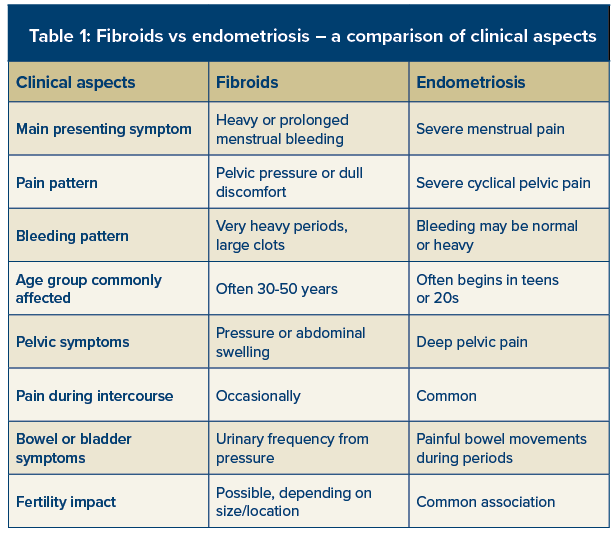
This table is intended as a guide to pattern recognition. There is often an overlap between conditions and clinical presentation can vary significantly between individuals.